
How Long Do Solar Security Camera Batteries Actually Last? The Honest Answer
Any brand can print “lasts for months!” on a box. Here’s what really determines whether your camera dies in a week or outlives the season — and the settings that matter more than battery size.
Let’s start with the promise nobody honest can make: a fixed number. “This camera lasts 6 months per charge” is meaningless — because two identical cameras on the same street can drain at ten times different rates. One watches a quiet fence line. The other points at a road where every passing truck is an event.
So instead of a fake number, here’s the complete power picture: what drains the pack, what refills it, and the settings that tip the balance. We build these cameras — this is the same math we use.
What Actually Drains the Battery
Ranked by how much they usually matter:
| Drain Source | Why It Hurts | Fix |
|---|---|---|
| Trigger count | Every PIR wake-up records a full 15fps clip. A busy road = dozens per day | Enable human filtering, lower sensitivity, narrow the detection zone |
| AOV interval | 1 frame every 3 seconds records 20× more than 1 per minute | Match the interval to the risk — gates short, pastures long |
| Live view & playback | Streaming is the single hungriest thing a camera does | Watch events, not the scenery |
| Weak 4G signal | One bar = the modem boosts transmit power all day long | Mount where you get 2+ bars, or use the extension cable to move the antenna side |
| Cold weather | Lithium packs lose usable capacity below freezing — physics, not a defect | Expect it. The solar panel and low-power modes exist for exactly this |
The Other Half: What Refills It
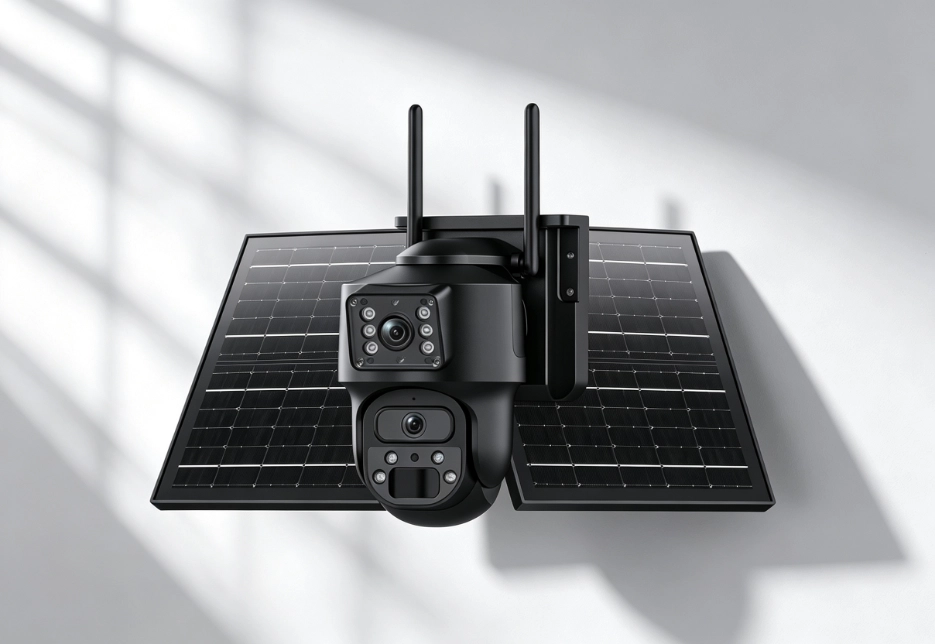
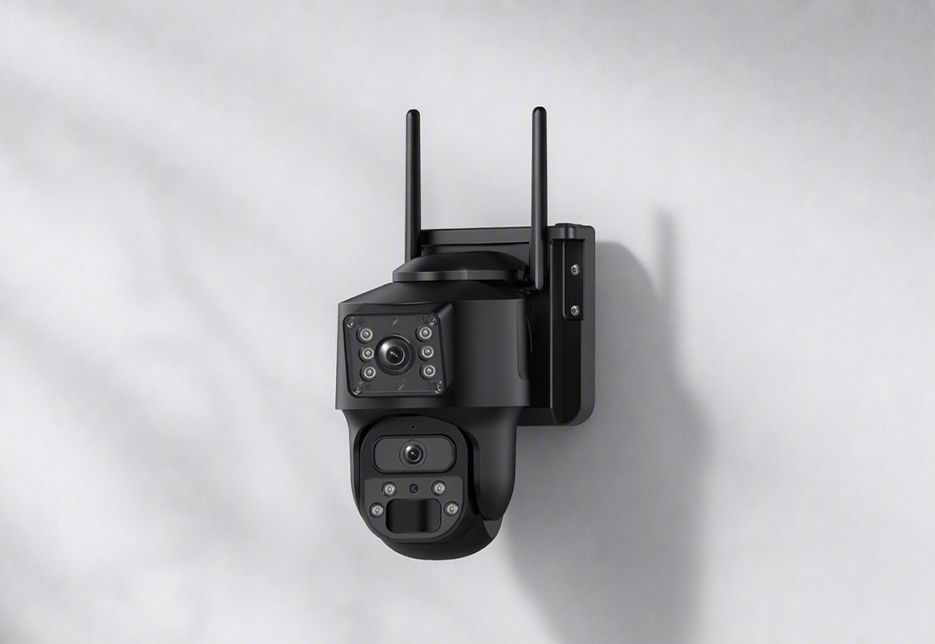
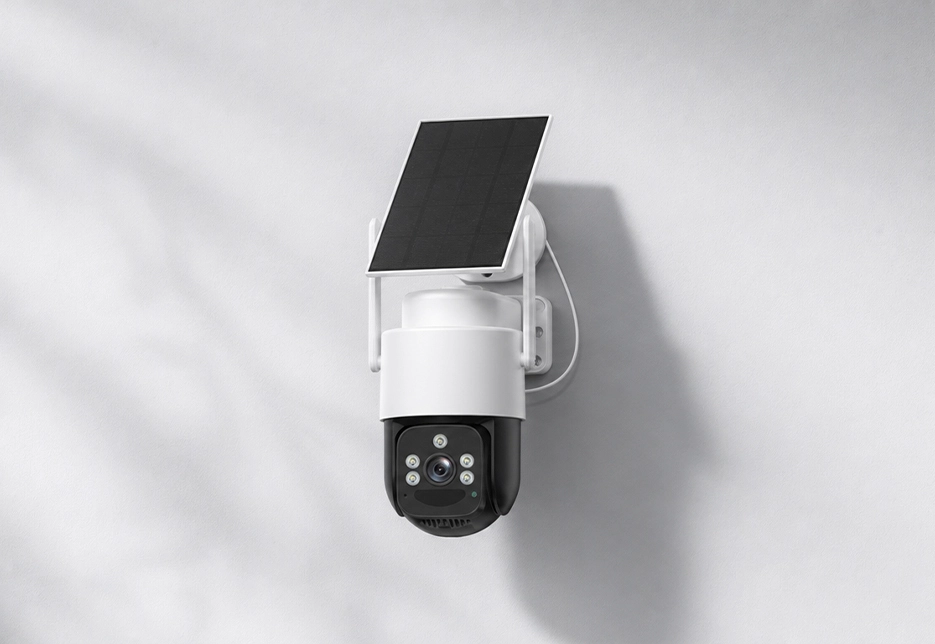
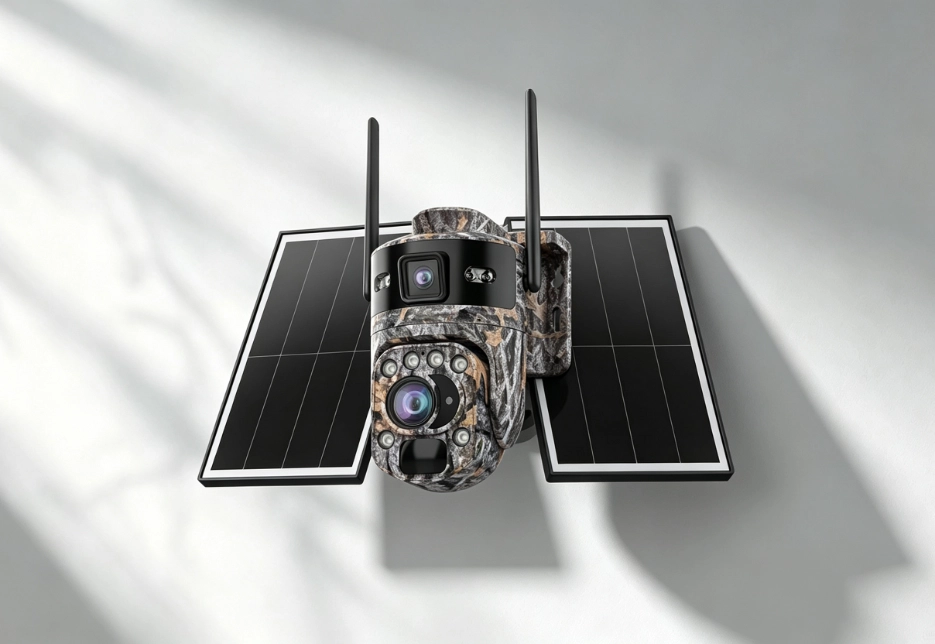
Battery capacity is your reserve; the panel is your income. Our two solar cameras illustrate the range:
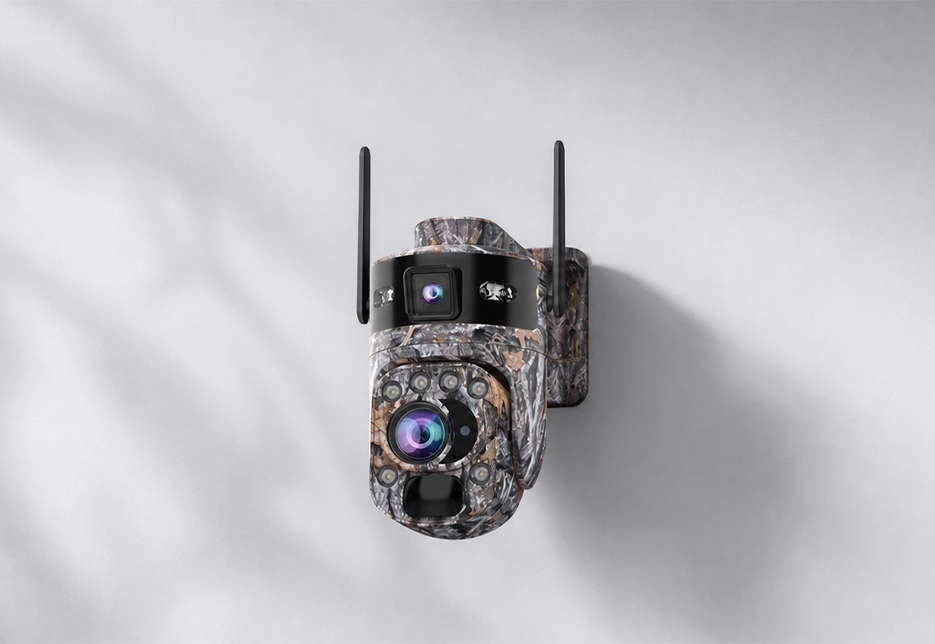
- RV Twinview 537: 10,050mAh pack (3×18650 cells) fed by dual panels totaling 6W
- RV Ranger PRO 637: 20,800mAh pack fed by dual panels totaling 14W — built for remote spots where a gray week must not matter
And three realities about panels that spec sheets skip:
- Direct sun or nothing. A panel behind leaves, dust or snow produces a fraction of its rating. Wipe it monthly.
- Angle = latitude. Tilt the panel roughly to your latitude, face it toward the strongest sun, and steepen the tilt for winter.
- Fully charged = charging stops. That’s normal, not a fault — the indicator light confirms it.
AOV: Why “Always Recording” Doesn’t Mean “Always Draining”
This is the counterintuitive part. A camera that records continuously at full frame rate would flatten any battery in a day or two. AOV cameras cheat physics:
- Idle mode: one frame every 1–60 seconds (you choose) — a trickle, not a stream
- Event mode: the instant PIR detects movement, full 15fps HD recording kicks in
- Low-power floor: if the pack drops (≈20% on the 537, ≈30% on the 637), AOV shuts off while PIR detection and app wake-up keep working. The sun refills the pack, and AOV resumes on its own.
Net effect: no gaps in the timeline, and a power budget a solar panel can actually sustain. That’s the entire reason AOV exists on battery cameras — and why cameras without it either miss the start of events or die young.
The one setting worth tuning first
AOV interval. A gate or driveway deserves a short interval (1–3 seconds). A wide-open pasture at 60 seconds still catches everything that matters and sips power. Match the interval to what the lens is actually watching.
Winter, Rain, and the Gray-Week Plan
Short days and low sun angles cut charging hard. Cameras survive it the same way a ranch truck survives a dirt road — with reserve and restraint:
- Big battery as buffer — the 637’s 20,800mAh is sized to ride out overcast stretches
- Clean panels after storms — snow on the panel is the #1 winter “failure,” and it’s free to fix
- Steepen the tilt for low winter sun angles
- Trim triggers — cold weeks are when human filtering earns its keep
- Emergency top-up: every solar model takes 5V/2A USB-C; the FourSight base station fast-charges the same way
The Bottom Line
Battery life on a solar camera isn’t a spec — it’s a balance. Triggers out, sunlight in. Get the settings right and a 10,050mAh pack outlives a badly-configured 20,000mAh one every time. Get them wrong and no battery on the market saves you.
That’s also why we publish the numbers: 10,050mAh / 6W for the Twinview 537, 20,800mAh / 14W for the Ranger PRO 637 — and let the settings guide above do the rest.
LONGEST ENDURANCE PICK
RV Ranger PRO Wireless (637)
20,800mAh · dual 14W solar panels · AOV · IP66
- Largest battery + largest panel in the solar lineup
- Low-power mode floor at ~30% keeps PIR and wake-up alive through gray weeks
- 36x combined zoom and color night vision to ~328ft while it’s at it